

Pars Equality Center: Empowering Immigrant Success Through Community Building
A redesigned website showcasing Pars Equality Center’s comprehensive services, including legal assistance and career development, to foster inclusion and provide guidance for Iranian immigrants.
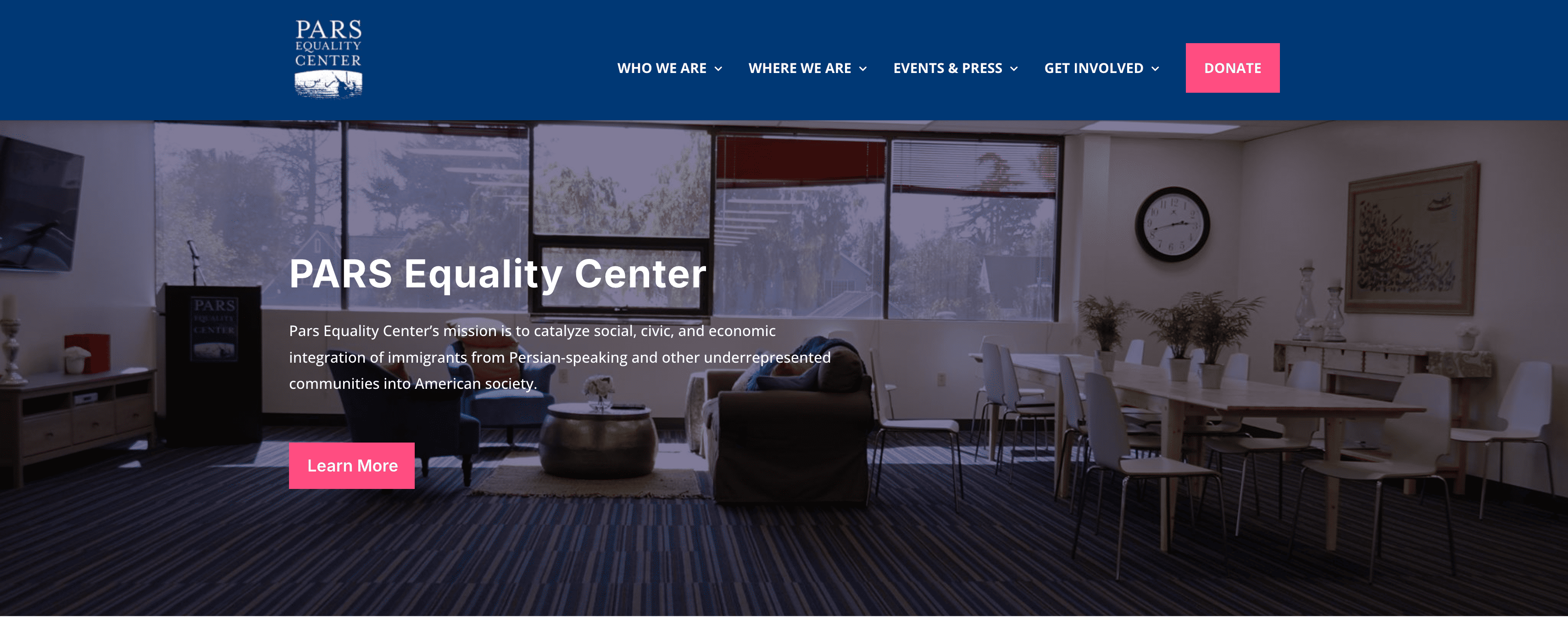
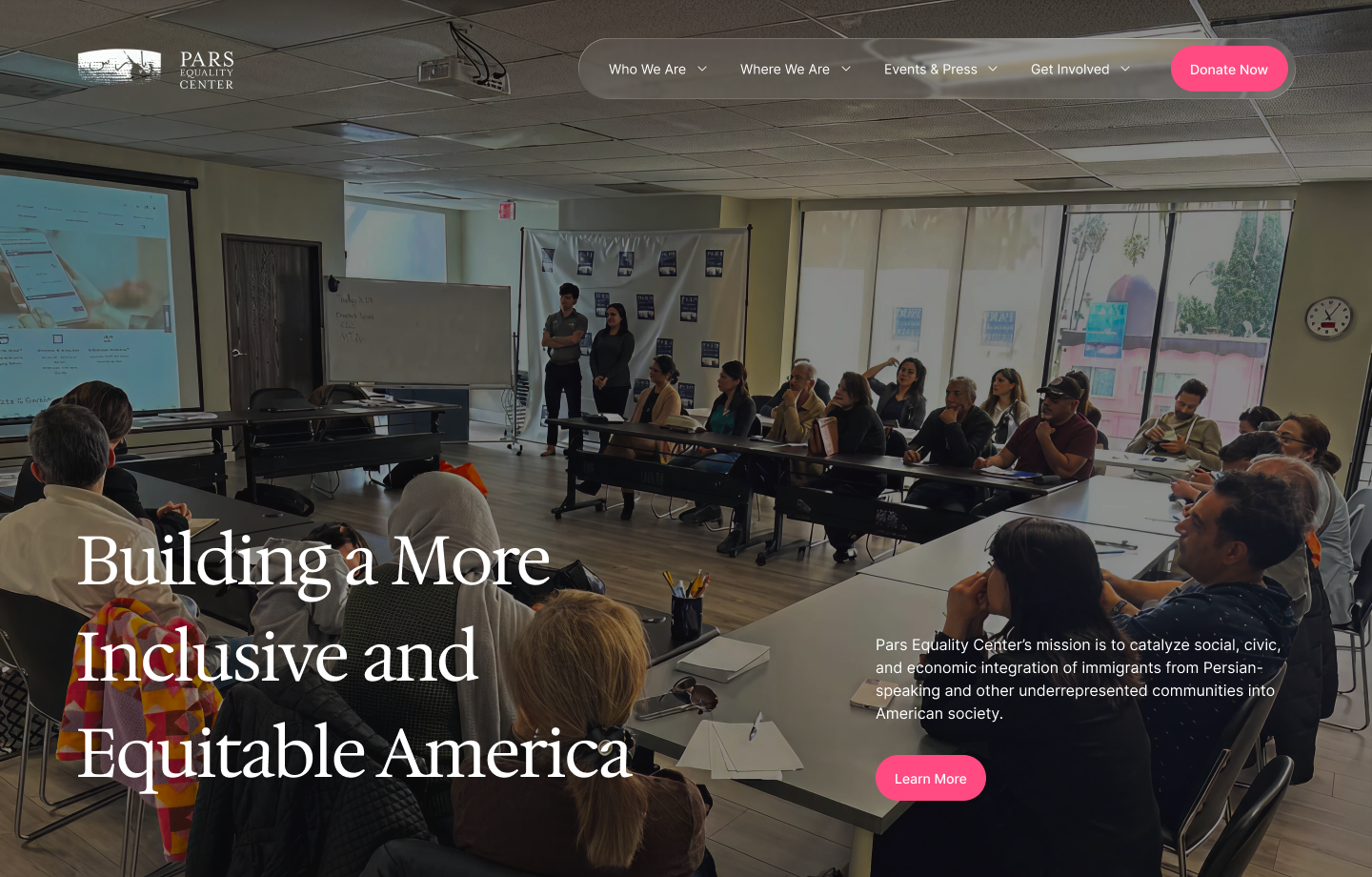
The original website (left) was ready to become more human-centric.
ROLE
TOOLS
DETAILS
While redesigning Pars Equality Center’s website, I identified an opportunity to better showcase their full range of support programs for underserved communities and integrate their growing client resources and programs more seamlessly into the user experience.
Problem Statement
Pars Equality Center’s existing website focused primarily on their statistics, locations, and financials, creating friction for users trying to discover their actual services. Key user personas faced the following challenges:
- Vulnerable clients struggled to understand the full variety of services beyond legal assistance (e.g., vocational training, food assistance, financial literacy).
- Program managers and staff found it difficult to locate and access internal or client-facing materials efficiently.
- Potential partners or donors could not easily evaluate Pars Equality Center’s full community impact or the scale of their programs.
Impact
- Resources in career development and food assistance were underutilized, right at a time when these issues are front and center in American public discourse.
- Users overlooked key essential financial services, limiting client empowerment and program adoption
- Potential funders and partners could not see the ‘faces’ of Pars Equality Center’s community impact
Opportunity
Redesigning the website allowed me to create a user-centered experience that highlighted Pars Equality Center’s entire scope of assistance while improving discoverability and accessibility of vital community resources. By balancing clarity for first-time visitors with depth for returning users, I could strengthen engagement, support client success more effectively, and position Pars Equality Center as an all-encompassing resource for immigrant and refugee communities.
User Research to Inform Pars Equality Center’s New Website
I led research initiatives to understand how Pars Equality Center's diverse clientele and funding partners interacted with the website and accessed essential support, using insights to guide the redesign.
Client Needs Assessment Surveys
Donor & Partner Interviews
Mobile Access Observation
Audit of Pars Equality Center’s Existing Website
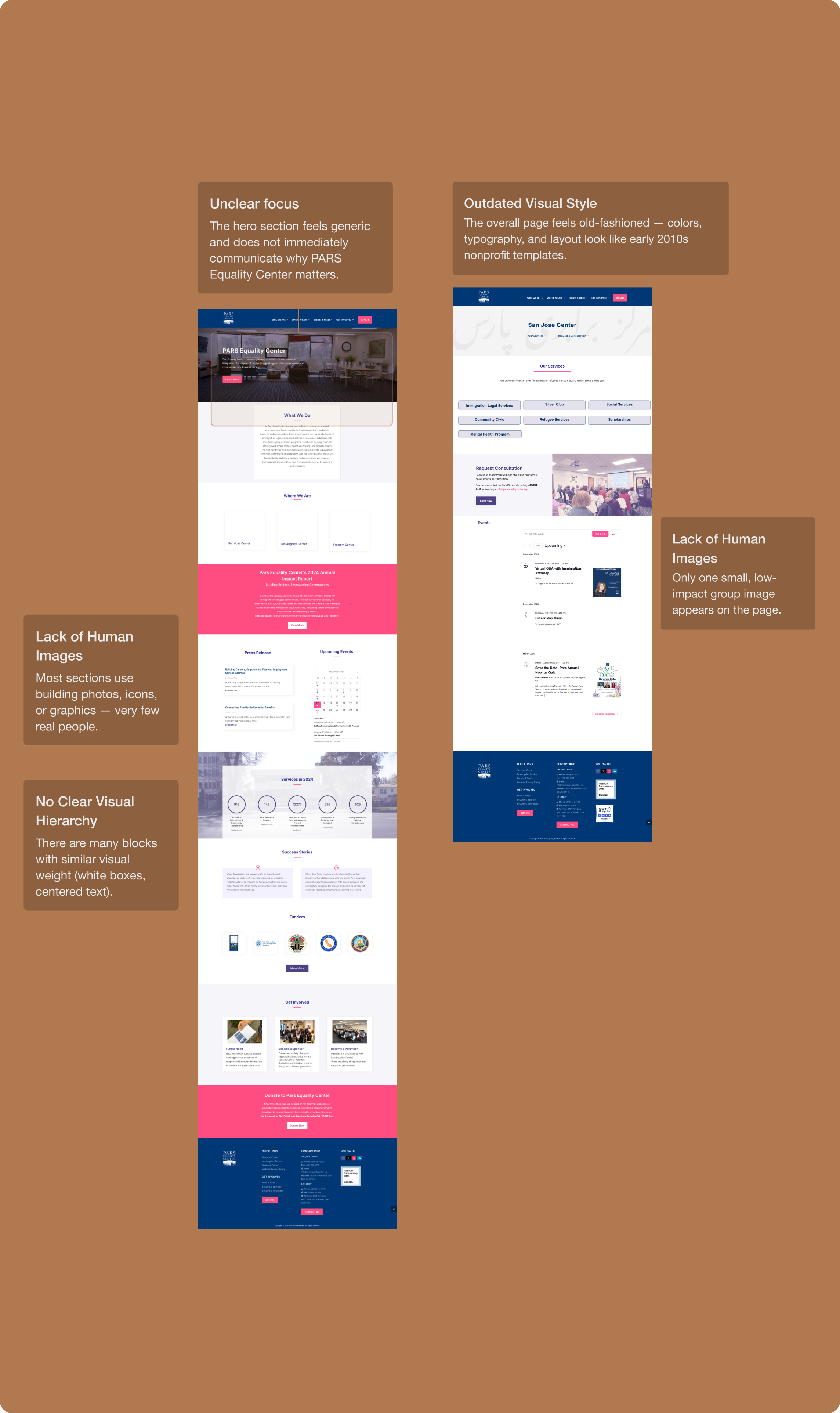
I conducted a thorough evaluation of Pars Equality Center's existing website, mapping content, layout, and functionality against insights from our user research. This audit highlighted critical areas where the experience failed to effectively communicate the breadth of services, instill trust, and engage users.
Key Findings
Vague Program Detail – Service descriptions lacked sufficient detail on eligibility and necessary documentation, hindering client preparation and intake efficiency.
Aesthetic Disconnect – Imagery felt stock, lacking authentic photos of clients or community interaction, which diminished the site's emotional impact and sincerity.
Limiting Color Palette – The current color scheme was dull and failed to evoke the necessary sense of hope, professionalism, and cultural vibrancy essential for the brand.
Information Silos – Critical support categories (e.g., tax support, financial literacy) were not cross-referenced, making it difficult for clients to access holistic aid.
Accessibility Challenges – Users with lower digital literacy or limited English proficiency struggled with complex navigation and dense blocks of text trapped in images they could not translate.
This audit provided a clear roadmap for redesign, informing improvements to navigation, content clarity, visual consistency, and user engagement across the site.
Observations I Gathered
Fostering Client Confidence
Empowering All Users
Cultivating Hope and Dignity
I collaborated with Pars Equality Center’s team to create user-centered content that clearly communicates their full range of services while making essential resources easily accessible for vulnerable immigrant clients.
Business Strategy Alignment
Support action-oriented clients – Make it simple for clients to access eligibility requirements, intake forms, and next steps for enrollment.
Build trust and credibility – Use clear, transparent language and showcase Pars Equality Center’s expertise through client success narratives and impact data.
Human-centered presentation – Use authentic photography and design elements that reflect the cultural richness and dignity of the communities served.
Content Structure Approaches
Program/Benefit – Highlight key support programs and explain the tangible, life-changing benefits for clients and their families.
Resource Guidance – Organize community tools and multilingual materials so users can quickly find what is most relevant to their goals.
Implementation
Hierarchical organization – Use clear sections and sub-sections for intuitive, low-barrier navigation across multiple languages.
Detailed outlines – Define information architecture and content placement to ensure consistency and ease of use for staff and clients.
Wireframes & Prototypes
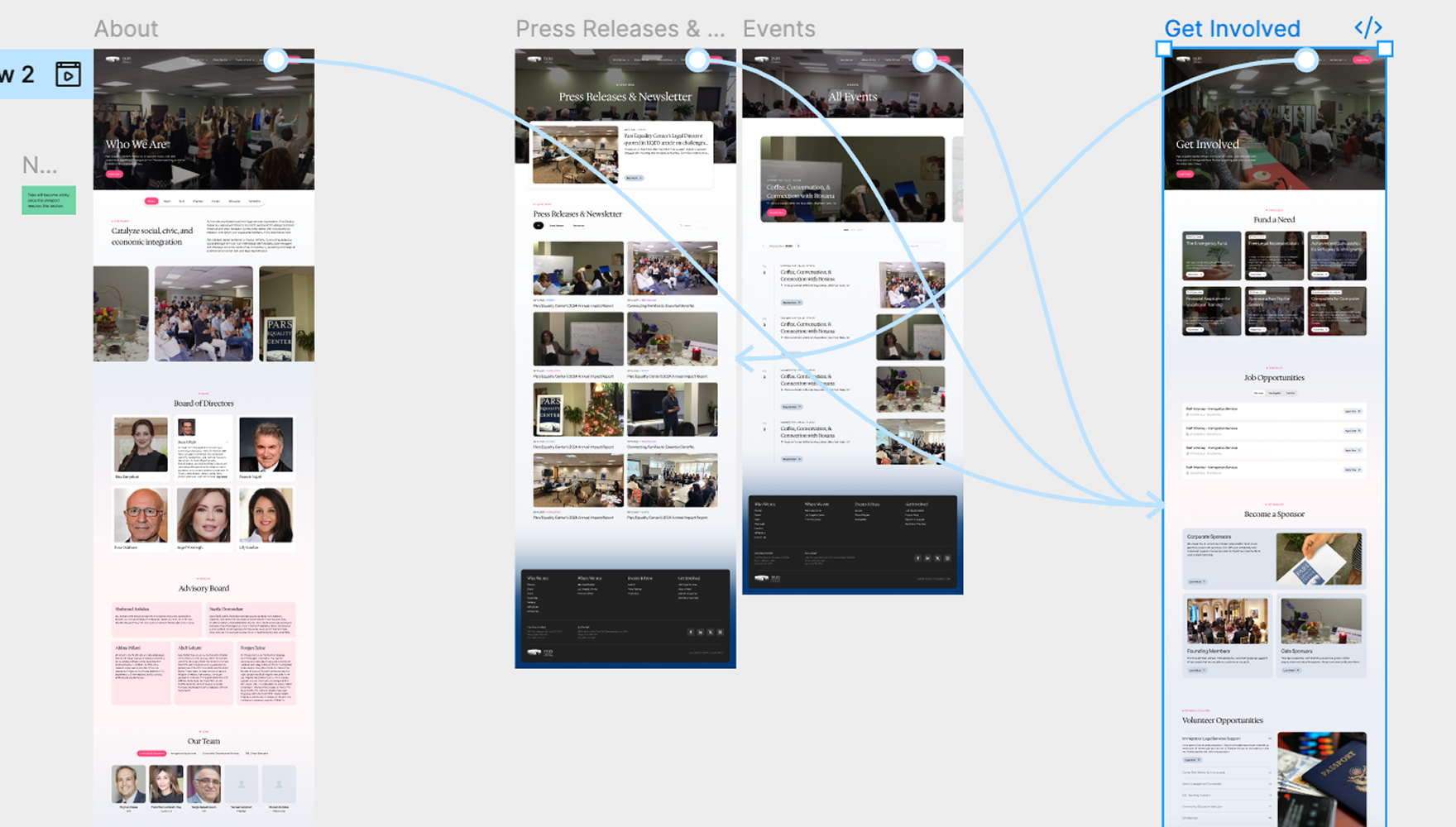
I began by developing low-fidelity wireframes to establish the foundational structure of the website, prioritizing the visibility of all core programs and improving access to client intake resources for vulnerable users. Once the core layout was defined, I translated the wireframes into interactive Figma prototypes, allowing me to simulate user flows, test navigation, and visualize the placement of authentic photography and key program details. Throughout this process, I engaged in extensive collaboration with the client team, iterating repeatedly based on their feedback to ensure the website captured the organization’s mission while remaining accessible and secure. Each iteration refined interactions, clarified information hierarchy, and balanced cultural dignity with usability, ultimately creating a polished prototype that served as a blueprint for the final development.


Design and Development
After finalizing the Figma prototypes, I completed the full high-fidelity design of the website, specifying every interface element, interaction, and visual detail. I documented design notes and content placement to ensure program consistency and accessibility during development. I then built the site in Webflow, implementing layouts, interactions, and responsive design while iterating closely with the client to refine details in real time. The result was a polished website that aligned with Pars Equality Center’s mission, enhanced client trust, and engaged partners effectively. Following testing and feedback cycles, I launched the site, providing immigrant and underserved communities with clear access to support programs in an intuitive, visually engaging experience.
.png)
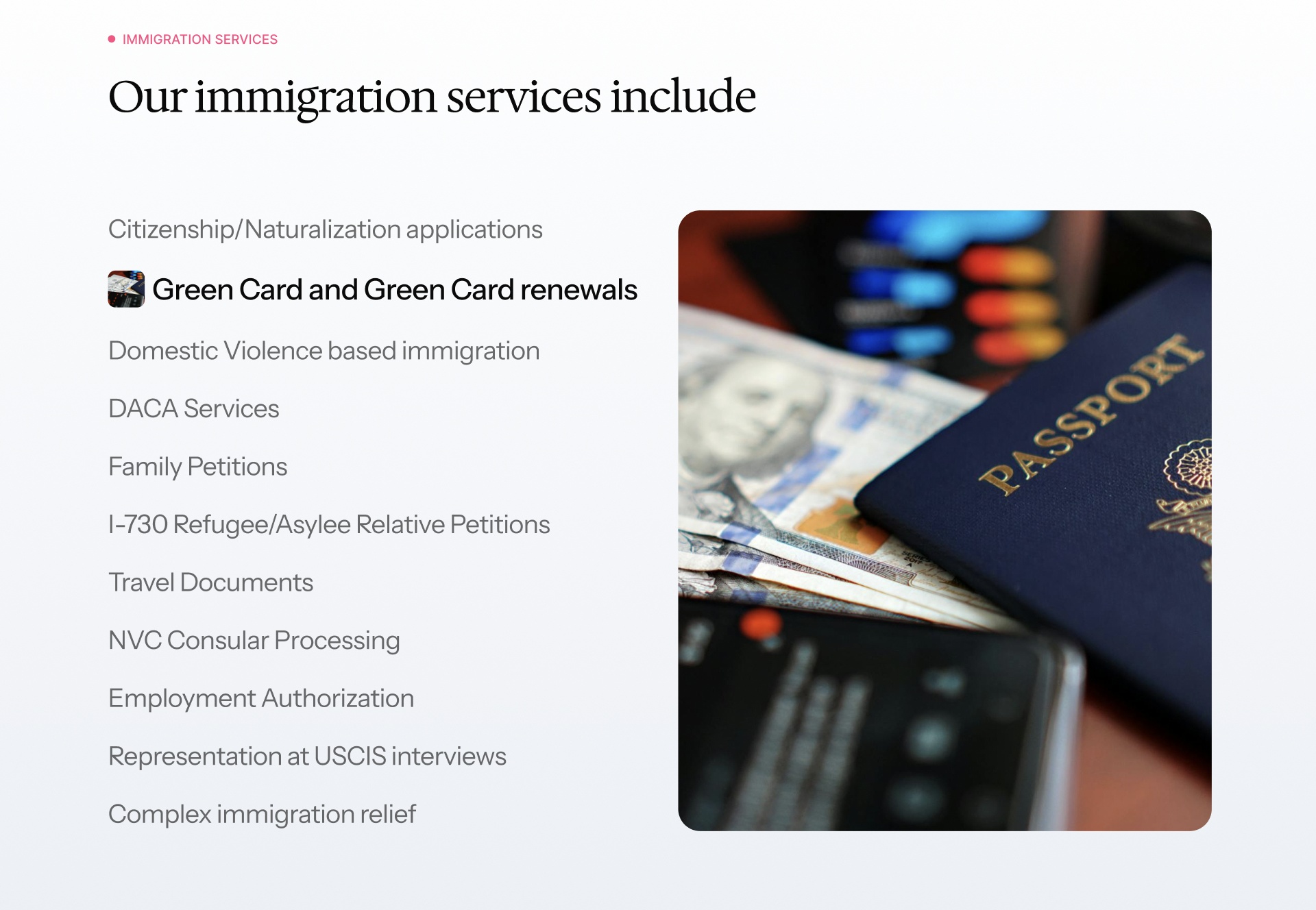
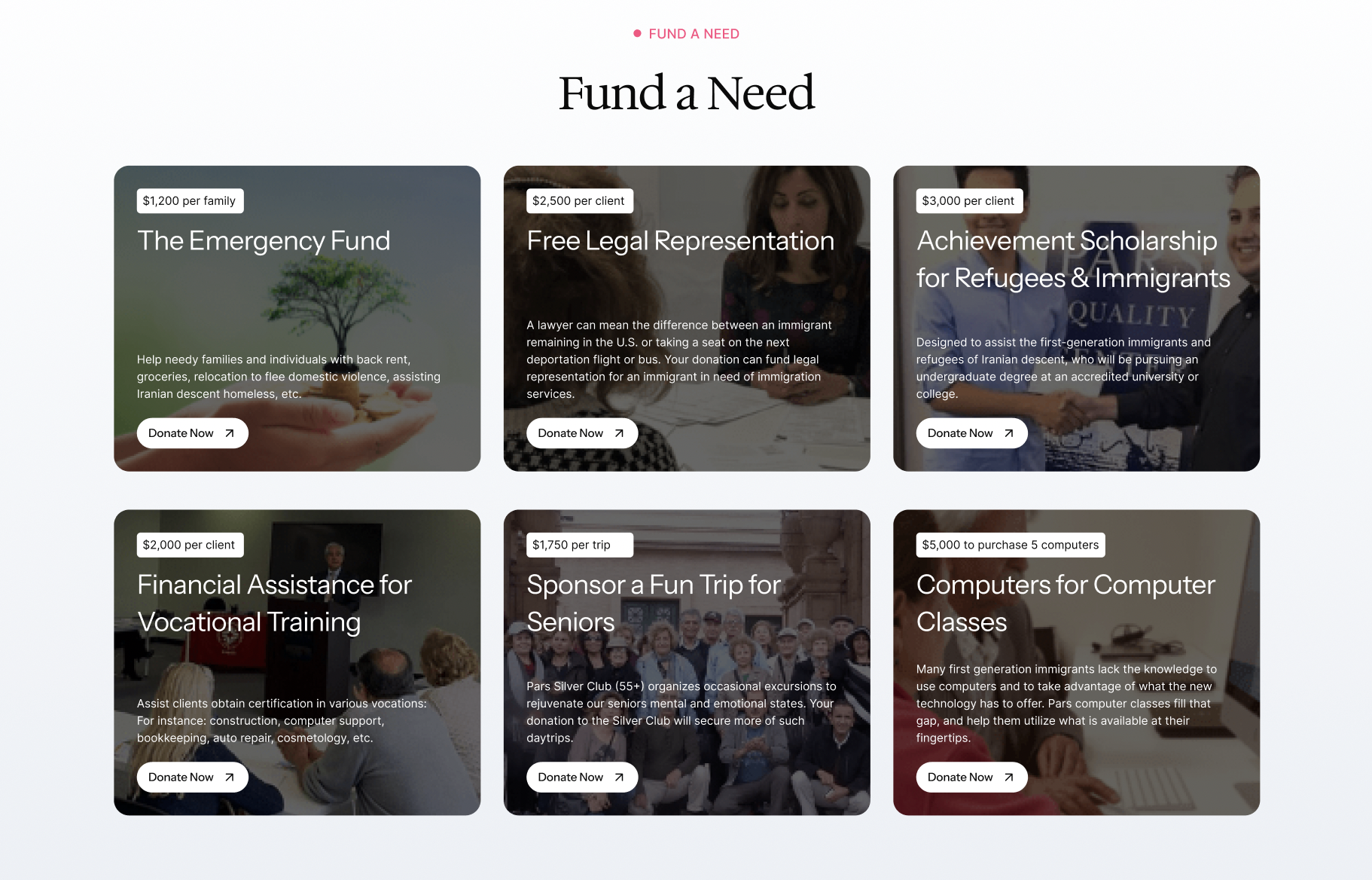
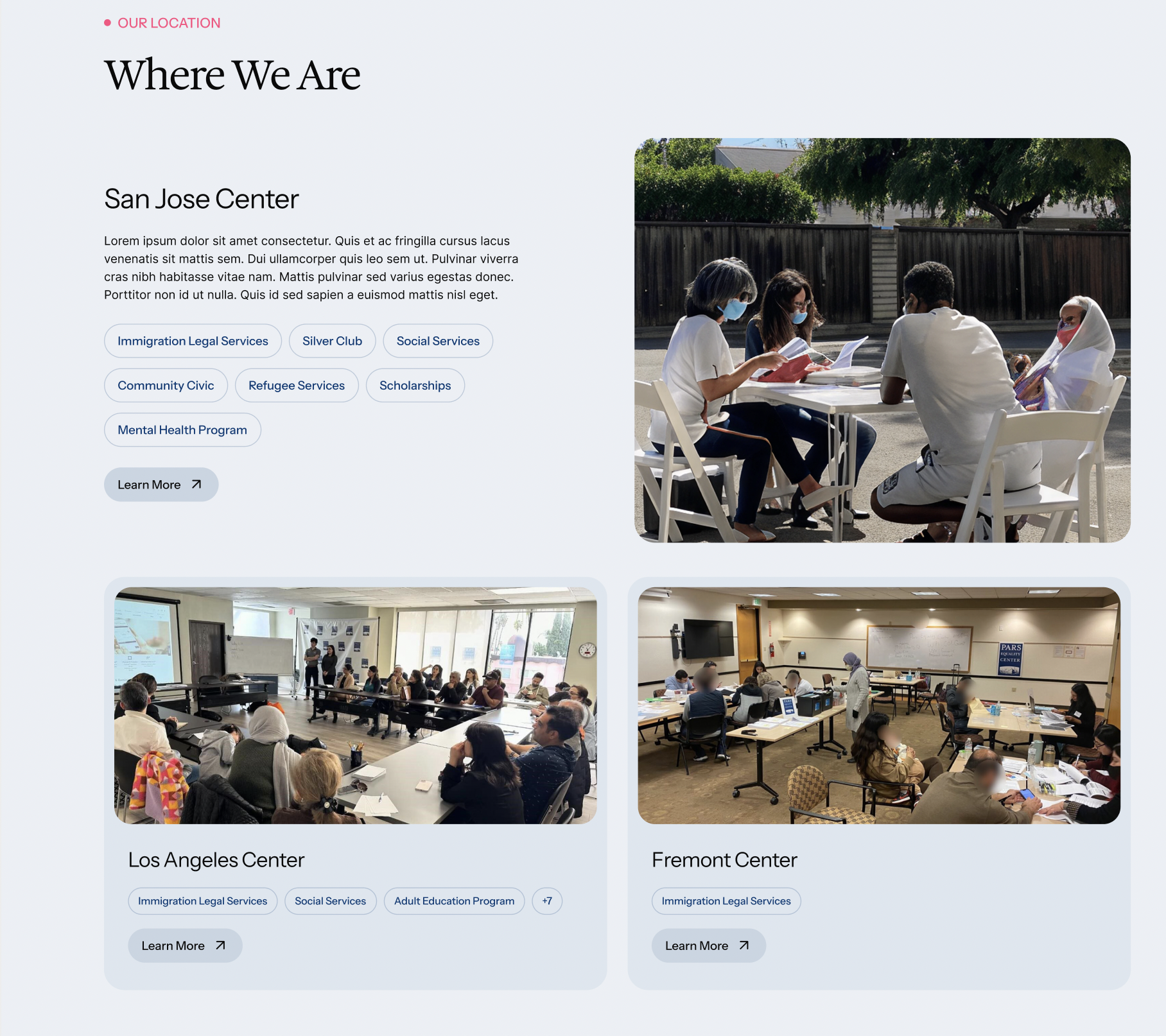
The Pars Equality Center website redesign project allowed me to create a platform that clearly communicates the organization’s full spectrum of support while making resources more accessible to vulnerable communities. By grounding design decisions in user research, I focused on intuitive navigation, authentic photography, and actionable content that empowers clients to take meaningful next steps toward self-sufficiency.
Key Outcomes
Through a user-centered approach, I designed a website that increases visibility of Pars Equality Center’s programs and streamlines access to essential services, making it easier for clients to engage with the organization. Iterative prototyping and client collaboration ensured the site reflected Pars Equality Center’s mission while maintaining trustworthiness and cultural dignity.
Impact on Users
The redesign helps immigrant clients and community members quickly discover services, navigate resources, and understand how Pars Equality Center can support their goals. Clear calls-to-action and simplified workflows encourage meaningful engagement and make the site approachable for a wide range of users.
Impact on the Organization
By integrating all services and stories into a cohesive, user-friendly website, Pars Equality Center is now better positioned to demonstrate its expertise, attract new funding partners, and support more individuals effectively.
