

Kidney Foundation of Central Pennsylvania: Guiding Patients to Kidney Care Access
A reimagined website offering vital education, advocacy, and support resources to those affected by chronic kidney disease, ensuring patients easily access care and emergency financial aid.
.png)
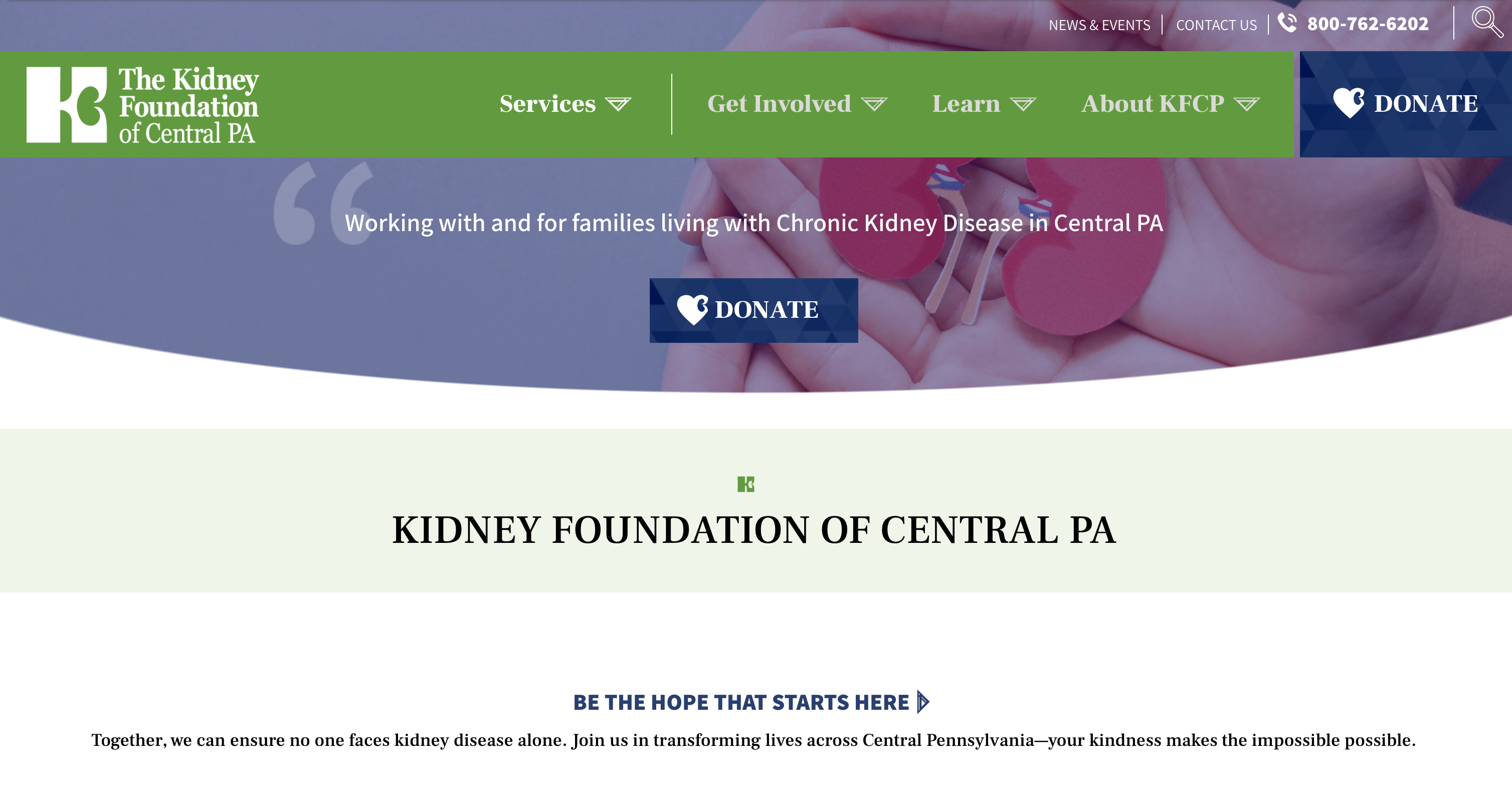
The original website (left) was ready to become more streamlined
ROLE
TOOLS
DETAILS
My objective for the Kidney Foundation of Central Pennsylvania website was to better align the digital experience with their mission, ensuring both patients and potential donors could engage with their awareness initiatives and direct patient assistance programs.
Problem Statement
KFCP’s previous website featured dated imagery and confusing navigation, which actively prevented patients from finding the urgent support they needed. Our user groups faced specific frustrations:
- Patients had difficulty locating critical informational materials regarding CKD treatment options and choices.
- Volunteers and Donors found it complicated to navigate the site's calls-to-action across events, giving, and community involvement.
- Staff spent too much time manually directing individuals to limited emergency assistance application forms.
Impact
- Valuable informational materials were difficult to access, slowing patient awareness and informed care decisions.
- The outdated, non-human imagery failed to build essential trust and compassion with a vulnerable patient audience.
- Opportunities for community stewardship and engagement were missed due to confusing pathways and outdated visual design.
Opportunity
I seized the opportunity to implement a clean, modern aesthetic across the site, making it easier for patients to find guidance and for the organization to solicit engagement. The redesign allowed me to eliminate legacy content, elevate compassionate photography, and dramatically improve the structure of resource pages, resulting in a clearer pathway to patient assistance.
User Research to Inform Kidney Foundation’s New Website
I led research initiatives to understand how patients, caregivers, and community members interacted with the website and accessed crucial disease management tools, using insights to guide the redesign.
Executive Stakeholder Workshops
Existing Content Inventory and Audit
Event and Volunteer Path Testing
Community Engagement Platform Analysis
Advocacy Content Readability Review
Visual Trust and Compassion Testing
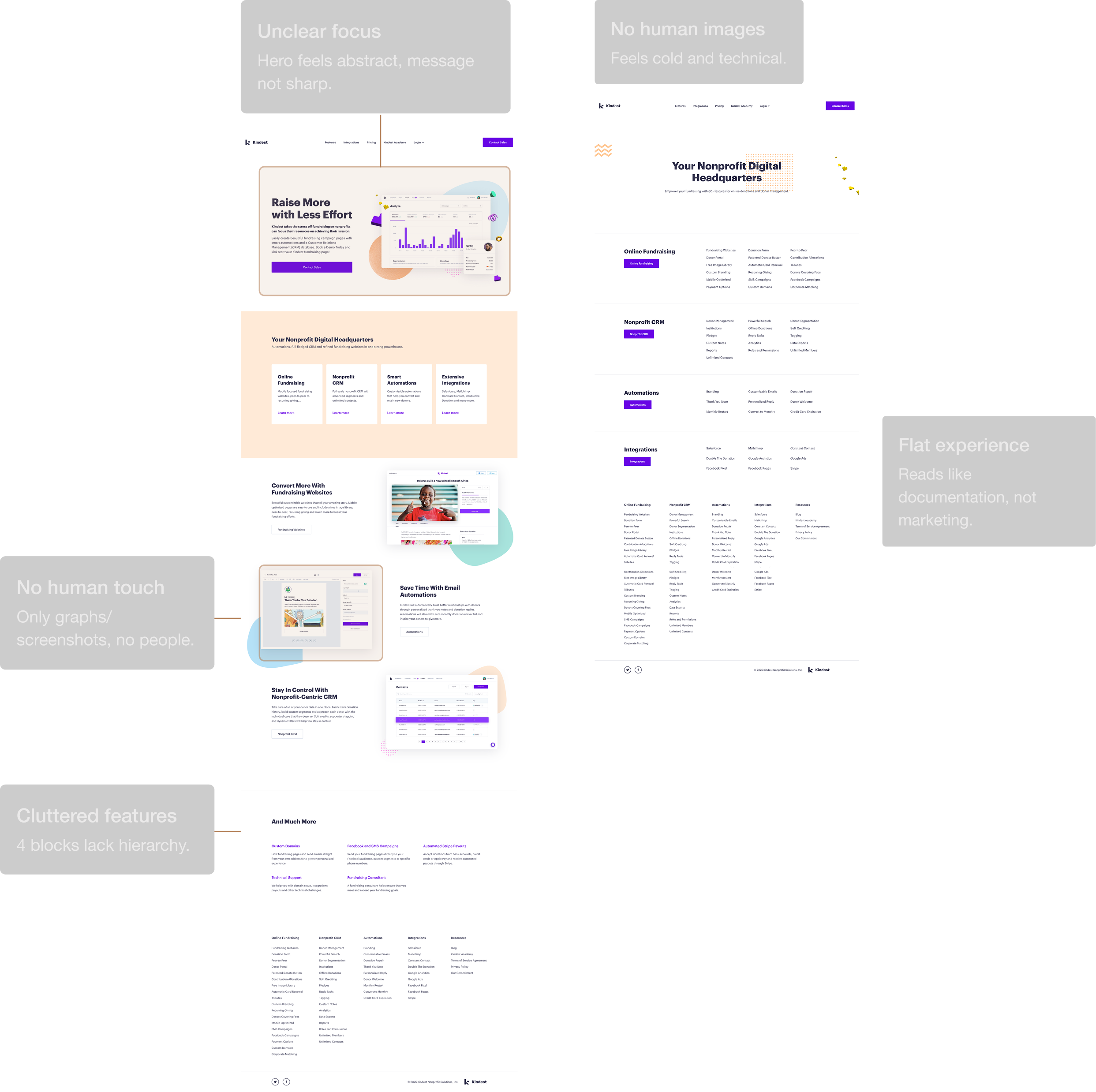
Audit of Kidney Foundation’s Existing Website
I performed a comprehensive review of the KFCP site, assessing its content, structure, and functions against the needs identified in our user research. This analysis exposed significant shortcomings where the experience failed to clearly present resources, reflect the organization’s integrity, and encourage involvement.
Key Findings
Outdated Information – The website contained legacy program details and expired event listings, creating confusion and diminishing trust in the foundation's status as a modern resource.
Impersonal Visuals – Photography lacked human connection, relying on generic images that failed to convey the compassion and supportive environment vital to patients and caregivers.
Overly Busy Aesthetic – The existing design featured excess visual clutter, hindering the desired shift toward a clean, clear aesthetic that emphasizes immediate information access.
Resource Fragmentation – Educational documents and support tools were scattered across disparate pages, making it inefficient for patients to find information on dialysis or transplants.
Engagement Barriers – Pathways for key community actions like donating, volunteering, and event registration were non-intuitive and often led to dead-ends.
This audit provided a clear roadmap for redesign, informing improvements to navigation, content clarity, visual consistency, and user engagement across the site.

I evaluated the websites of national kidney foundations and regional healthcare non-profits, analyzing their strategies for resource delivery, donor outreach, and patient advocacy to identify areas where KFCP could excel.
Competitor Analysis
My goal was to ensure the KFCP website effectively highlighted its unique regional support and case-by-case financial aid, creating a standout experience that transcended the standard offerings of national groups.
I analyzed digital platforms operated by large national kidney organizations and smaller regional health charities, focusing on their methods for organizing complex medical information, encouraging local participation, and soliciting funding. I evaluated their presentation of advocacy initiatives, emergency assistance forms, and patient stories to determine market best practices and identify opportunities for KFCP to leverage a clear, compassionate digital identity.
Elevated Patient Dignity
Streamlined Information Access
Maximized Community Participation
Clear Pathway to Aid
Observations I Gathered
Prioritizing Patient Information
Instilling Hope and Professionalism
Highlighting Community Value
I partnered with the KFCP team to craft patient-centered content that accurately conveys their critical support mission while ensuring essential educational and financial aid resources are highly accessible to patients and caregivers.
Business Strategy Alignment
Simplify action pathways – Design straightforward user flows for all high-value actions: completing the emergency aid application and registering for events.
Establish trust and authority – Employ a clean, professional aesthetic and showcase the foundation’s impact through success stories and testimonials.
Content Structure Approaches
Action/Outcome – Highlight key support mechanisms (e.g., financial aid) and explain the immediate, positive relief for patients and their families.
Engagement Funnel – Organize donation and volunteer opportunities to clearly guide community members through different levels of involvement.
Implementation
Hierarchical organization – Utilize clear sections and sub-sections for intuitive, low-friction navigation to aid resources.
Detailed outlines – Define information architecture and content placement to ensure consistency and ease of use for both patients and KFCP staff.
Wireframes & Prototypes
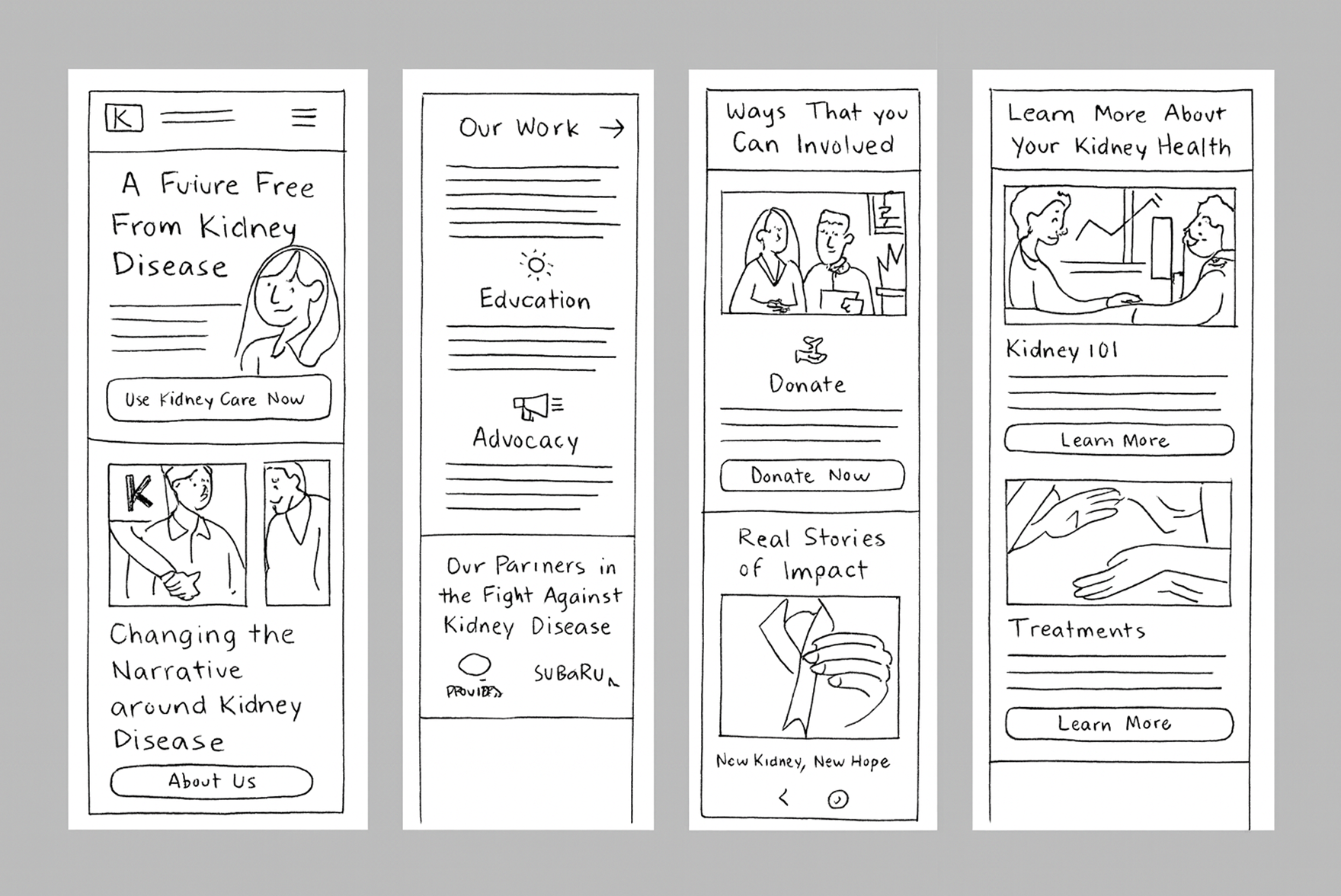
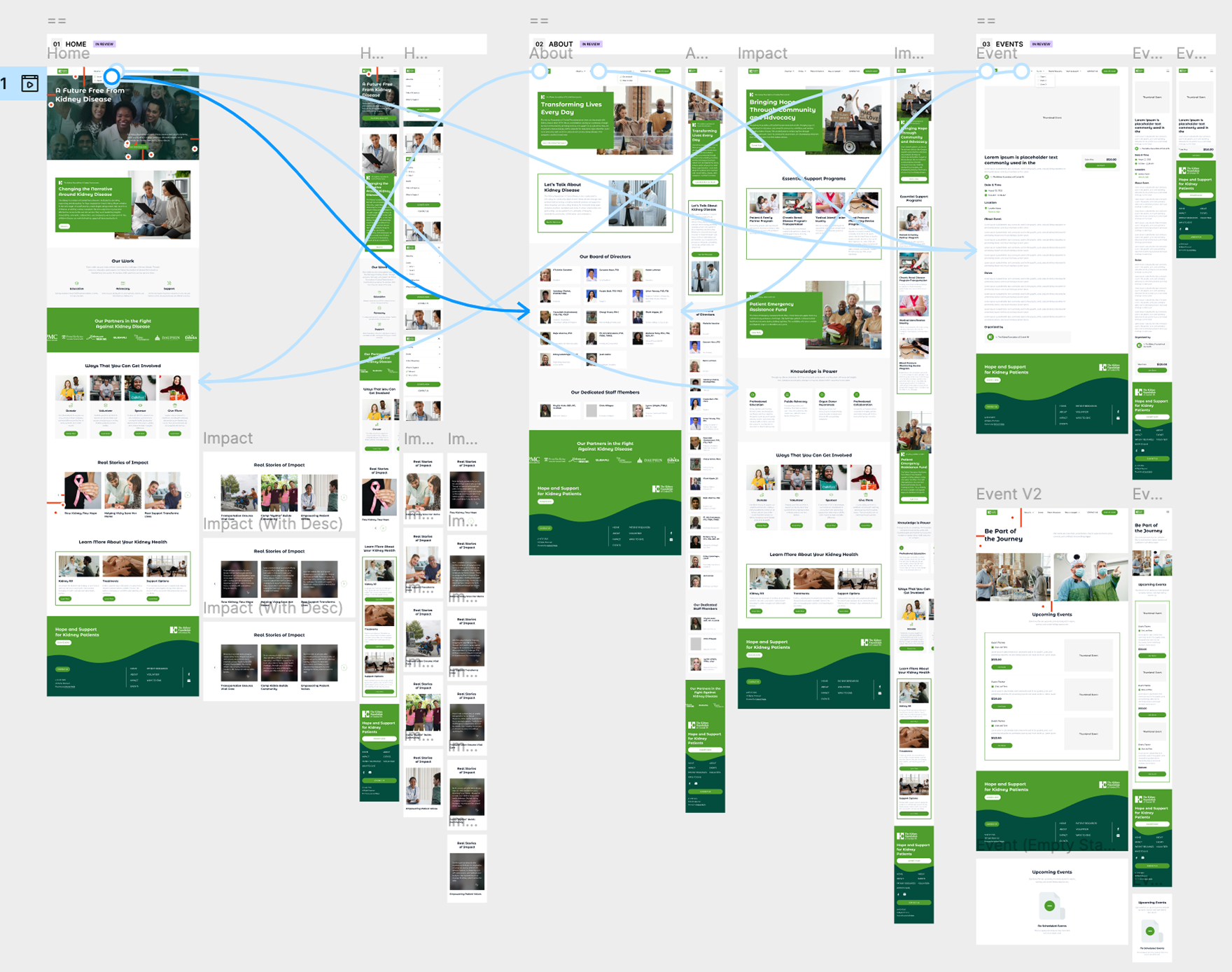
The process started with low-fidelity wireframes to quickly define the site’s structural foundation, focusing on optimizing the presentation of educational resources and simplifying the emergency financial aid application. After establishing the core layout, I moved to interactive prototypes in Figma, which allowed me to model critical user journeys, validate navigation systems, and test the integration of modern imagery and simplified information. The entire design cycle involved close consultation with KFCP leadership, prompting continuous refinements based on their input to ensure the platform clearly communicated the mission while remaining functional and trustworthy. Every stage focused on enhancing interactivity, clarifying the site architecture, and balancing a clean aesthetic with user comprehension, ultimately yielding a final prototype ready for production.
Design and Development
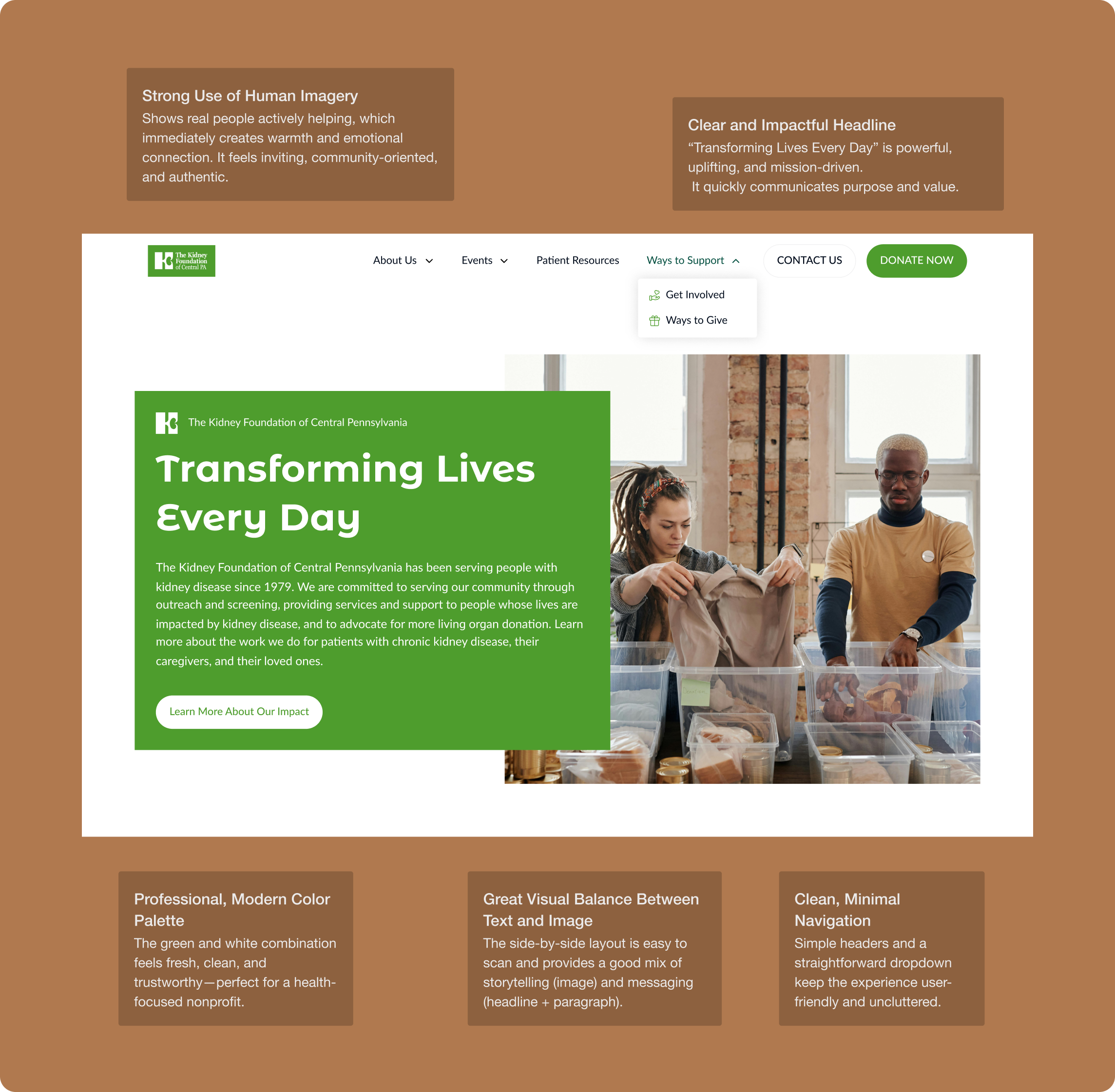
After finalizing the Figma prototypes, I executed the comprehensive high-fidelity design for the website, detailing every visual component, behavioral interaction, and screen layout. I created exhaustive design documentation and detailed annotations to guarantee the new clean aesthetic and educational content remained consistent during the build phase. My subsequent focus was preparing the entire design system for the KFCP dev team, implementing style guides, technical specifications, and responsive definitions. This delivered a sophisticated, fully documented platform that clearly supported the foundation's core mission, streamlined resource access, and encouraged community involvement. Following rigorous quality assurance and client sign-off, the finished files were successfully handed off, providing the development team with a clear, trustworthy blueprint for building the vital kidney care information platform.
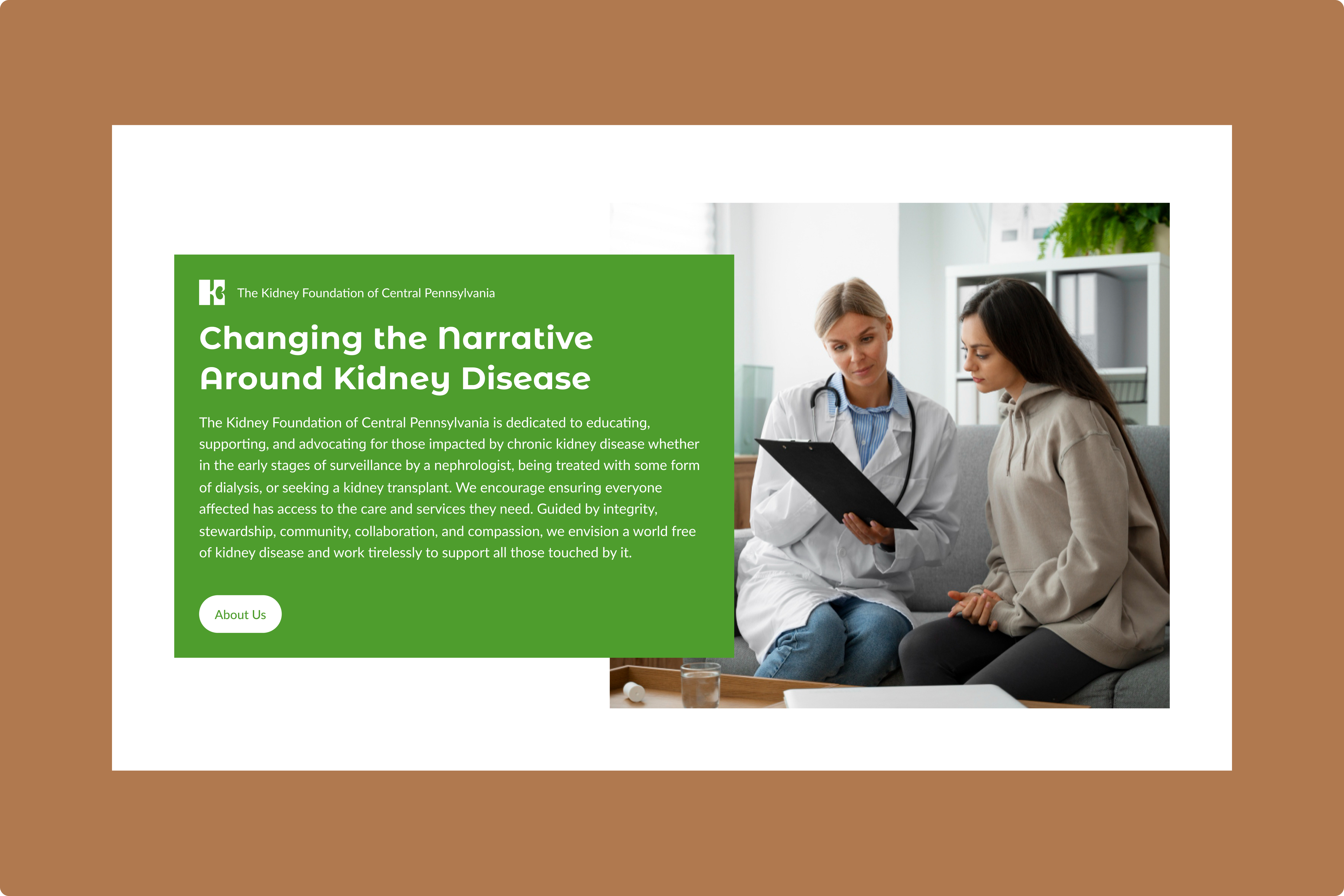

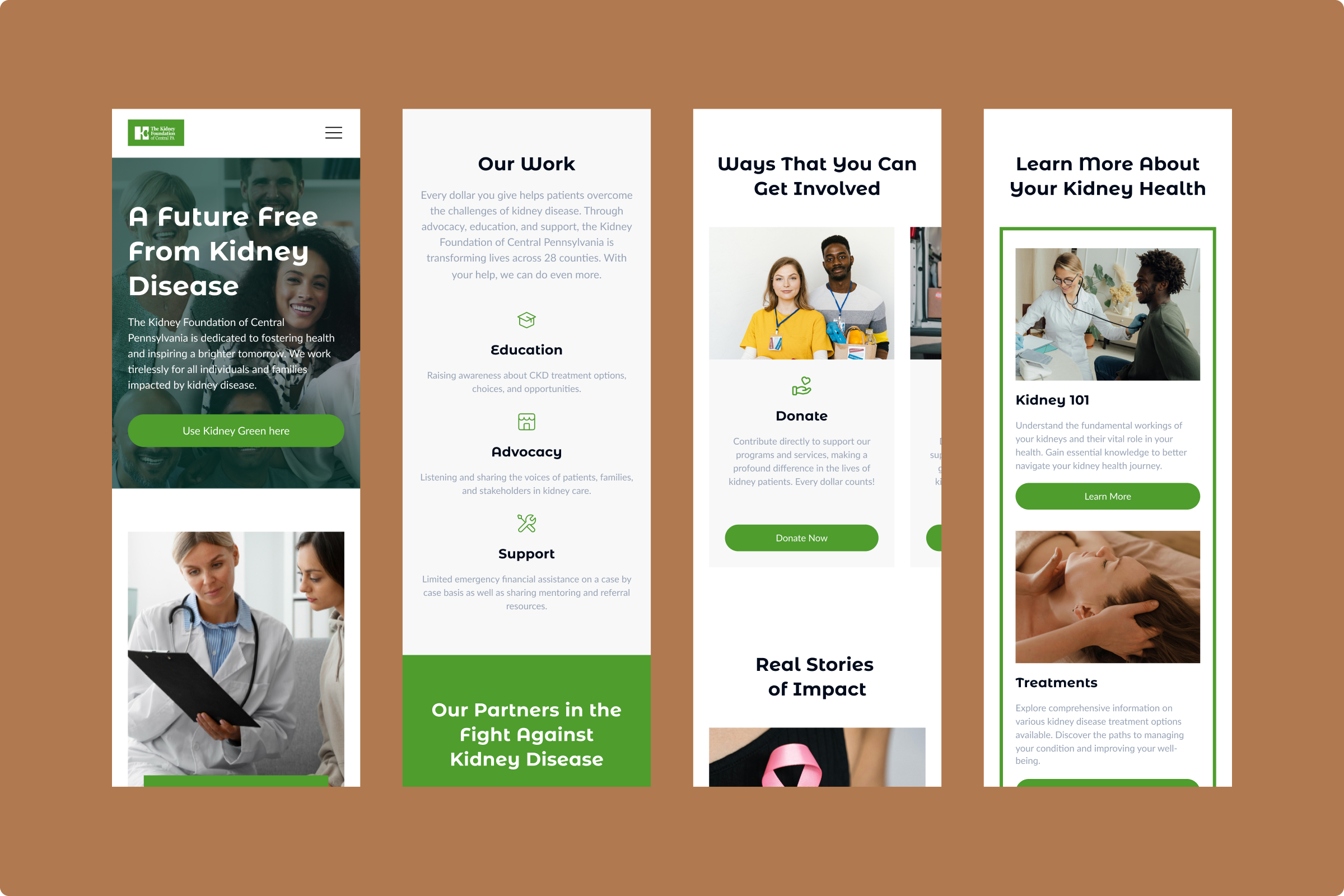
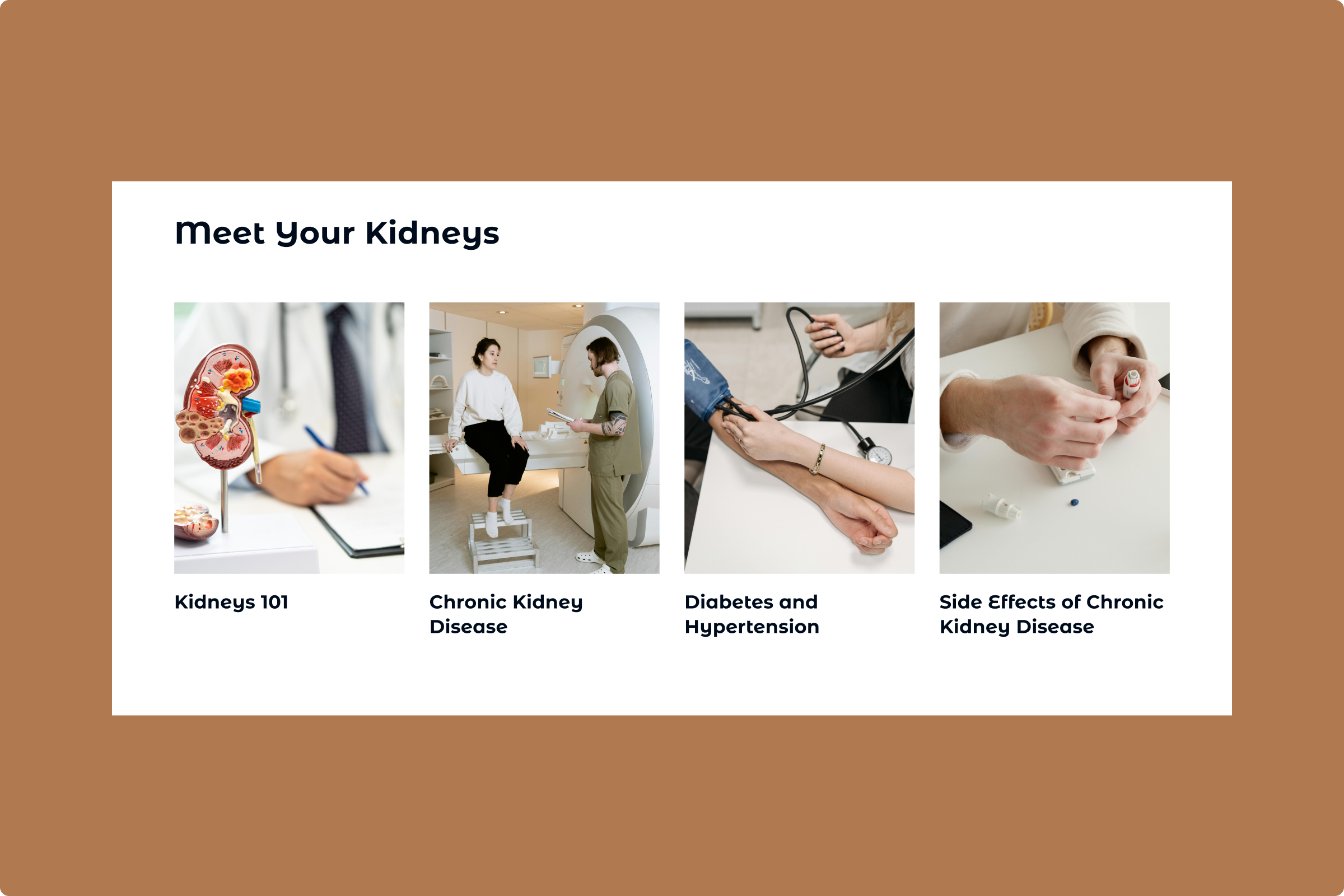
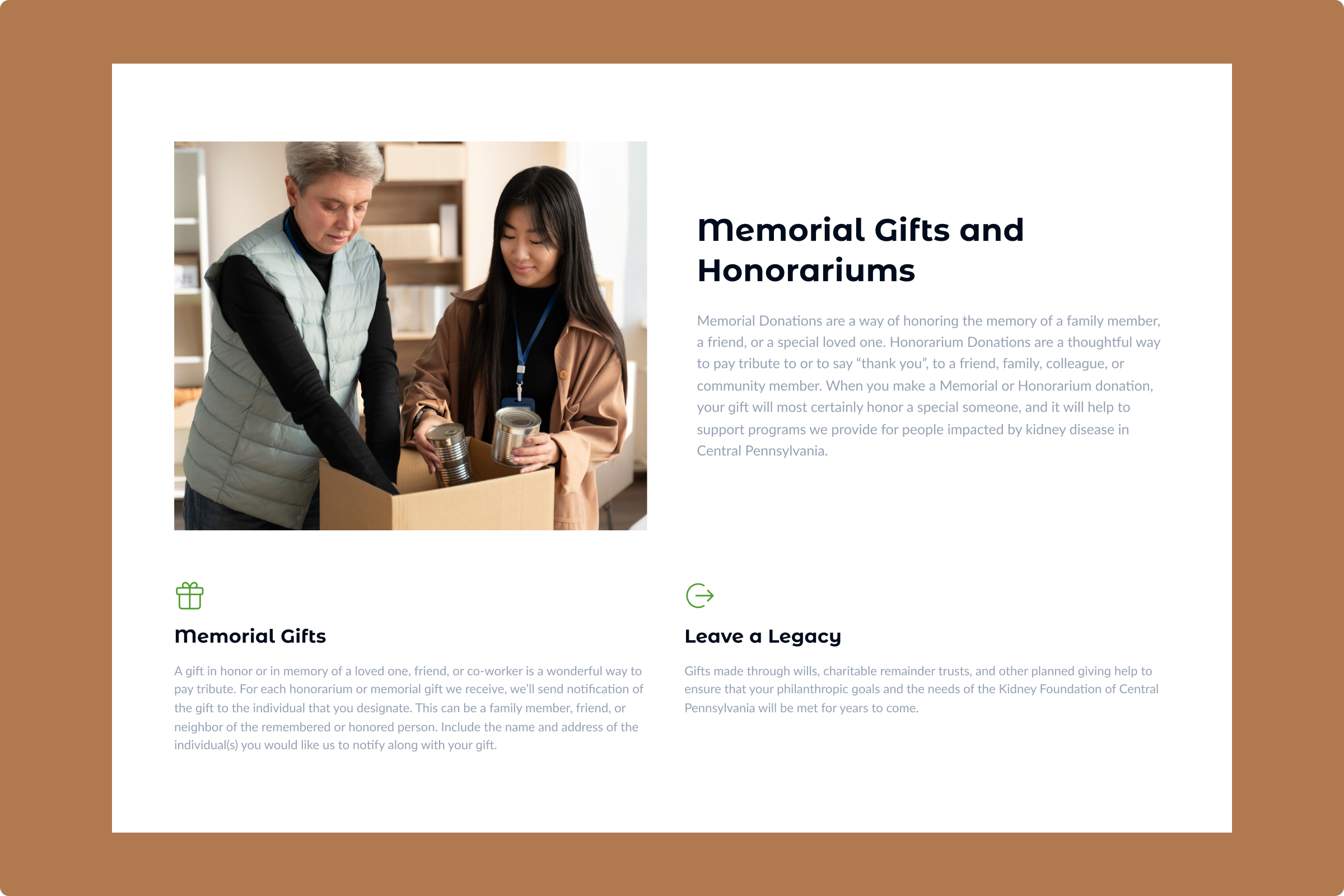
This project for the Kidney Foundation of Central Pennsylvania resulted in a website that clearly communicates their dedicated support model while streamlining complex health and financial resources for patients. By ensuring design choices were rooted in patient needs, I focused on a clean aesthetic, compassionate imagery, and clear pathways that guide users through critical care decisions.
Key Outcomes
Using a strategic, patient-first approach, I delivered a website that improves the discoverability of KFCP's educational materials and simplifies the process for accessing emergency financial aid. Continual testing and close client partnership guaranteed the site's final execution aligned with the foundation’s vision while delivering a trustworthy and intuitive experience.
Impact on Users
The revised website enables patients and caregivers to swiftly locate resources, understand treatment options, and find clear instructions for applying for assistance. Simplified user flows and prominent calls-to-action encourage immediate engagement and make the site a reliable source for those facing chronic kidney disease.
Impact on the Organization
By uniting all educational content and engagement opportunities into one cohesive destination, KFCP is now optimally positioned to demonstrate its community stewardship, attract new donors, and ultimately serve more individuals.
Strategic Value
Beyond enhancing day-to-day patient support, this redesign demonstrates how a targeted digital strategy can solidify a non-profit’s authority. The new site acts both as an essential service tool and a powerful showcase of KFCP's regional influence, bolstering sustainable fundraising efforts.
